How to use AI to create a training game faster

Turning a standard training module into an interactive experience takes time: understand the topic, organize the key messages, write questions, imagine mechanics, plan feedback, then test the journey.
This is where AI becomes useful. It does not build the game for you. It speeds up the parts that usually slow production down: moving from raw content to a first playable structure, varying formats, finding puzzle ideas, rewriting instructions, or generating clearer feedback.
With a platform like Ludiz, AI can act as a design assistant. It helps you start faster while you keep control over the content, tone, mechanics and publication.
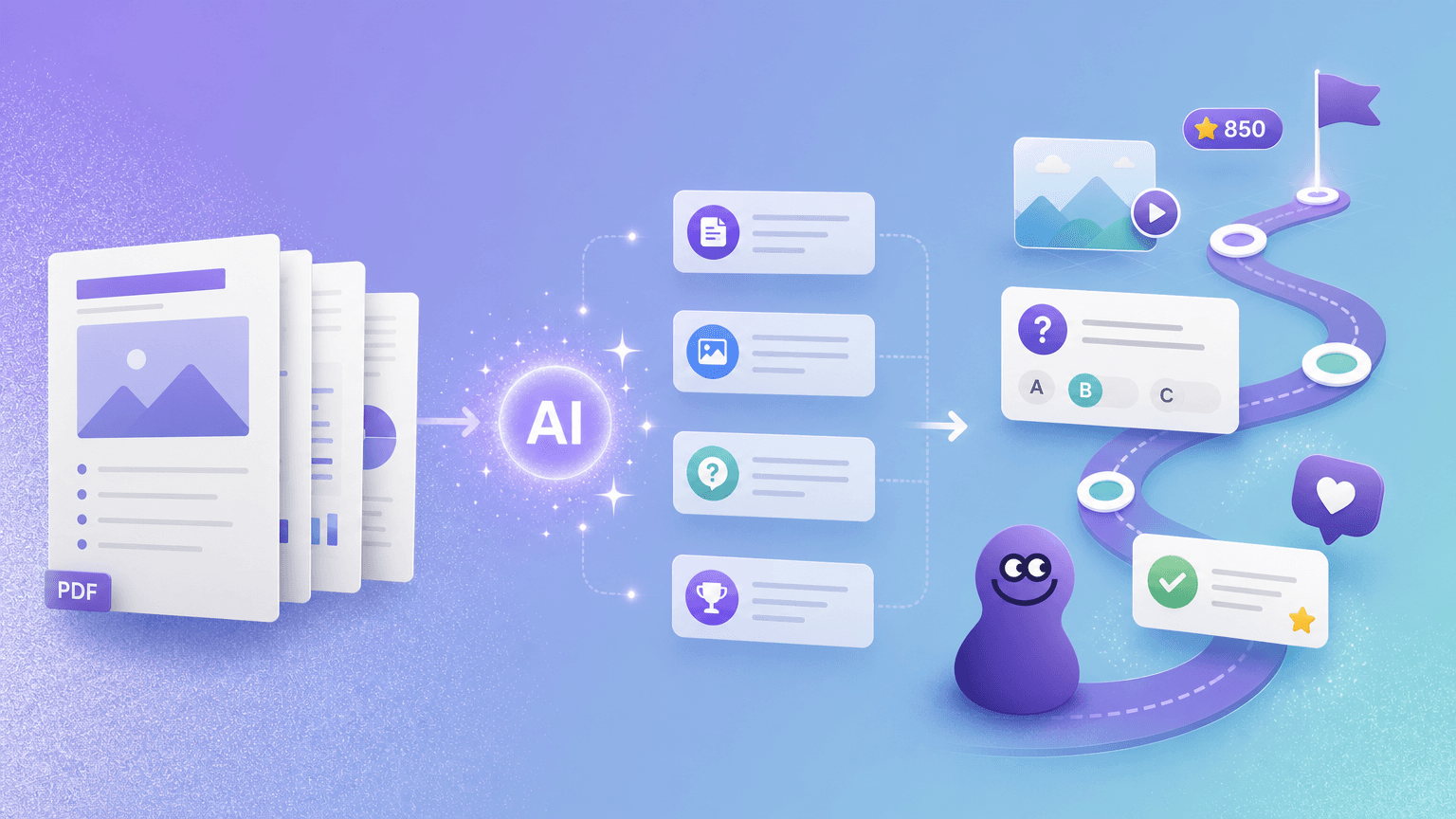
AI speeds up scoping. It does not replace learning design
Before creating a game, you need to answer one simple question: what should the player remember or be able to do at the end?
This is often the most important step. A good training game is not existing content with points and badges pasted on top. It turns a learning objective into active progression: discover, understand, practise, make mistakes, receive feedback, then try again.
AI can help clarify that scope from a brief, a training document, a PDF, a slide deck or an internal note. For example, it can suggest:
- the essential messages to get across;
- a step-by-step progression;
- difficulty levels;
- knowledge-check questions;
- scenario or mission ideas;
- feedback for right and wrong answers.
The value is not only time saved. AI also helps you get past the blank page and gives you a first version to challenge.
Moving from static content to an interactive journey
A lot of training content is designed to be read or watched: slides, handouts, videos, internal documents. A game needs a different logic. The player has to do something.
AI can turn static content into interactive sequences. A theory chapter can become a quiz. A procedure can become a mission where the player puts steps back in order. A list of best practices can become a true or false challenge. A business case can become a mini-scenario with choices and consequences.
In Ludiz, these ideas can then become concrete mechanics such as:
- MCQs and visual questions;
- fill-in-the-blank activities;
- sorting and ranking steps;
- swipe cards;
- code locks;
- touch images with zones to find;
- branching journeys;
- content steps to explain, tell a story or debrief.
The point is to vary the rhythm. A good journey alternates information, action, feedback and progression. AI proposes the raw material. The editor turns it into a playable experience.
Create faster without losing control
The risk with AI is producing a lot of content without producing a good experience. The designer still matters.
A first AI-generated version should be reviewed with a few simple questions:
- is the information accurate?
- does the difficulty match the audience?
- are the instructions clear?
- does the feedback actually help players understand?
- does the progression tell a story?
- does the game stay smooth on mobile?
That combination works best: AI to speed things up, humans to decide, simplify, add context and make the experience meaningful.
With Ludiz, the goal is not to remove the design phase. It is to make it faster and more concrete. You start with an intention, get a first journey structure, then adjust the mechanics, media, scoring, rules, feedback and publication.
Very concrete use cases
AI applied to training game creation can help in several contexts.
For onboarding, it can turn a welcome booklet into a progressive mission: discover the company, identify the right habits, understand internal tools and validate key steps.
For job-specific training, it can generate practical cases, common mistakes to spot, situation-based questions or decision scenarios.
For an awareness campaign, it can help create a short, memorable quiz that is easy to share by link or QR code.
For an internal event, it can suggest a team challenge, a scored journey or a clue hunt adapted to the place and audience.
In every case, the game becomes an active medium. Participants do not just receive information, they handle it.
Measure what actually works
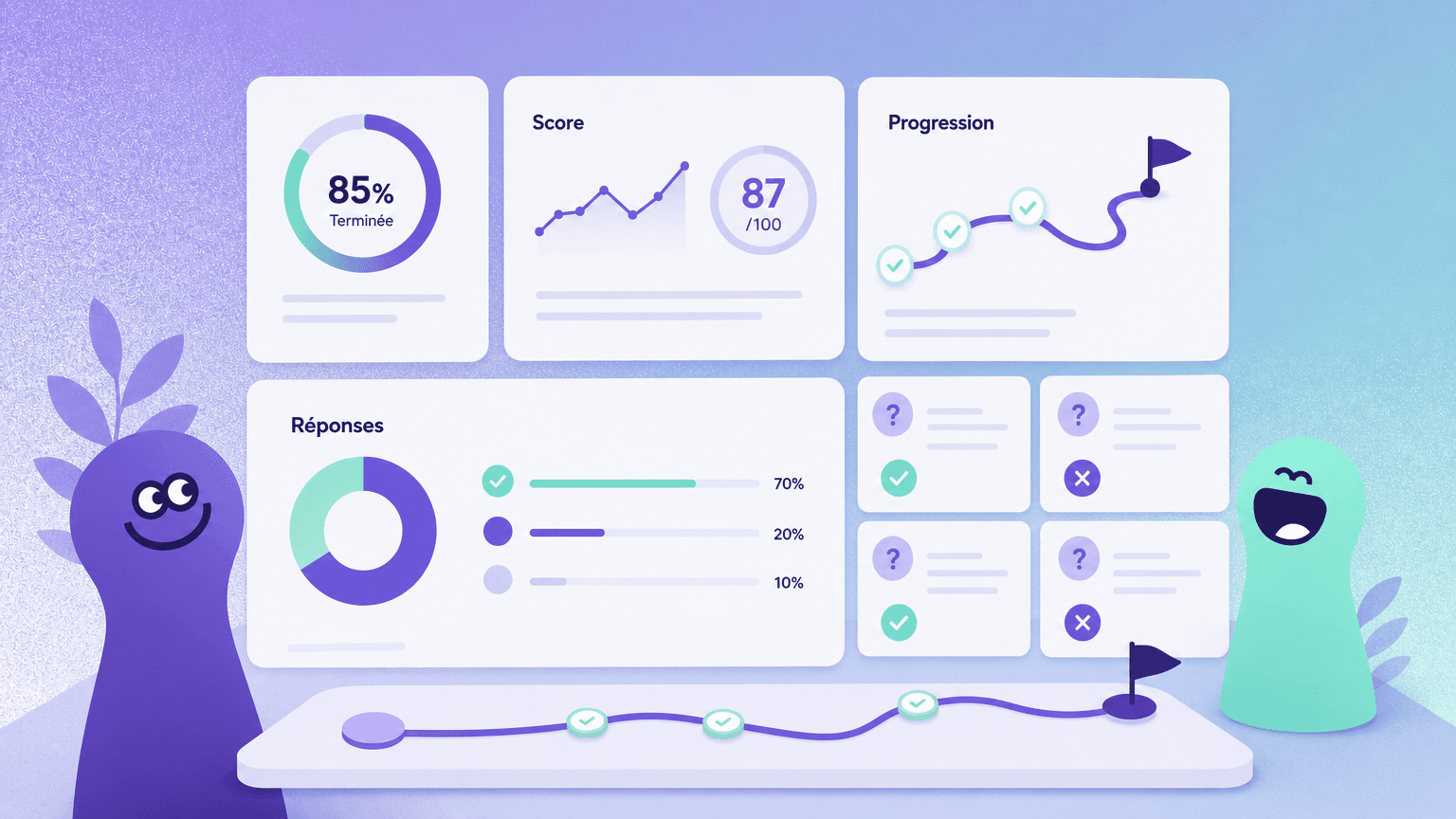
Creating faster is useful. You also need to know whether the journey works.
A training game can surface useful information: participation, completion, scores, progress, answers and points of difficulty. This data helps you see what players understood, what needs work, and where they drop off.
That is a major advantage over a standard training asset. The game does not only engage people. It lets you observe learning in action.
5 good practices for using AI well
A few simple principles make AI much more useful when creating a training game.
Start with a clear objective. AI will give better results if you specify the audience, context, target duration, expected level and type of experience you want.
Ask for several options. One AI output is rarely perfect. Compare the angles, mechanics and wording.
Keep the content short. An effective game gets to the point: one clear instruction, one simple action, useful feedback.
Vary the formats. Alternate quizzes, manipulation, choices, observation and debrief.
Test the journey. Even a good idea needs to be played to check rhythm, clarity and difficulty.
AI as a creation copilot
AI opens a faster, more iterative way to design training games. It helps turn raw content into a first structured experience, then enrich that base with game mechanics.
A successful serious game still depends on good scoping, relevant interactions and clear feedback.
With Ludiz, AI becomes a creation copilot: it speeds up the first steps while you keep control over the final experience. The result is an interactive journey that is easier to produce, more engaging to play, and simpler to measure.
Have training material you want to turn into a game? Ludiz helps you move faster from idea to interactive journey.